
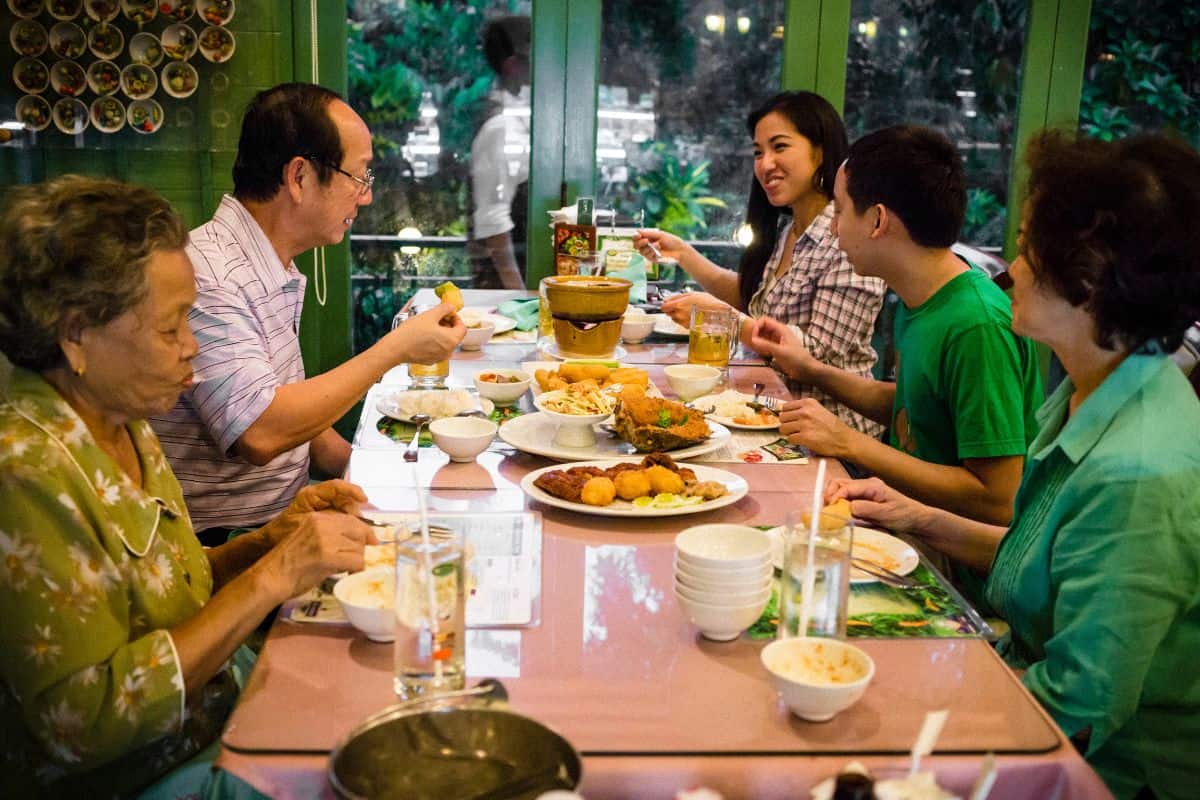
The rapid spread of the idea that you can just toss pasta in a pan, call it ‘authentic,’ and expect success in a city as hyper-competitive as Bangkok—is over. Today’s diners are no longer chasing the ‘next big thing’; they are seeking architectural precision, narrative-driven ingredients, and the kind of disciplined hospitality that turns a meal into a permanent memory. That’s where authentic Italian restaurants defined by discipline, narrative, and rhythm—in Bangkok becomes a definitive, high-value destination for the city’s most discerning power diners.
Here’s how they do it.
1. The Authority of Hospitality Craft: When Technique Speaks for Itself
In Bangkok’s visually saturated dining scene, the most credible italian restaurant in Bangkok will communicate authority through disciplined, resonant craft, not spectacle. Authenticity is not declared—it is experienced.
True distinction comes from disciplined execution:
Ø Dough developed through patient fermentation and careful handling
Ø Sauces layered slowly, guided by experience rather than shortcuts
Ø Seasoning and texture calibrated with precision
These details create a form of non-verbal communication between kitchen and diner. The signals are subtle but unmistakable:
Ø The clean fracture of a well-fired crust
Ø The depth and balance of a reduction
Ø The exactness of seasoning
For Bangkok diners, this quiet mastery offers something rare—a moment of authenticity in a highly manufactured city. When craft reaches this level, explanation becomes unnecessary. The quality speaks with complete authority.
2. The Fluidity of the Bangkok Diner: Mastery of Temporal Calibration
If mastering tempo is the philosophy, temporal calibration is the execution. The same restaurant must evolve with Bangkok’s shifting daily rhythms.
At midday, the dining room becomes an instrument of efficiency:
Ø Brighter lighting and a focused atmosphere
Ø Streamlined service with precise pacing
Ø Menu architecture built around refined, quickly executed dishes
The goal is clarity and control over time for professionals moving through the city.
By evening, the environment expands into indulgence:
Ø Softer lighting and relaxed pacing
Ø Longer table engagement and attentive service
Ø Menus that infuse aspects of social friction reducer- ones that encourage exploration and sharing
That’s how experiential spaces treat their environment- indoors and outdoors as a living environment, to help patrons to “recalibrate”—physically and psychologically.
3. The Narrative of Provenance: Ingredients as Cultural Memory
In Bangkok’s volatile dining landscape, great Italian restaurants anchor the diner through provenance and authenticity. Ingredients are not commodities—they are carriers of heritage and place.
Exceptional kitchens curate their sourcing with intention:
Ø Olive oils tied to specific regional groves and harvest traditions
Ø Flours derived from historic grain varieties used in Italian regions
Ø Cheeses, tomatoes, and cured meats selected for artisanal lineage
This commitment functions as a quality control system the diner can feel. In a market where standards often fluctuate, disciplined sourcing becomes a stabilizing force.
For the guest, authenticity reveals itself through precise signals:
Ø Consistency of flavor — the dish tastes the same across multiple visits
Ø Verifiable sourcing — ingredients tied to identifiable producers and regions
Ø Regional clarity — menus grounded in specific Italian culinary traditions rather than generic “Italian-style” cooking
These markers eliminate uncertainty. The diner no longer evaluates the restaurant on promises or presentation; the integrity of the ingredients becomes the proof.
4. Neighborhood Resonance: Synchronizing with the City
Bangkok isn’t one dining scene. It’s dozens of different cities stacked together. What works in a corporate district fails in a residential street. What thrives in a nightlife corridor dies at lunchtime.
The restaurants that last understand this.
They adapt their energy to where they are:
Ø Business districts: fast, precise, frictionless lunches
Ø Residential areas: slower dinners and familiar service
Ø Trendy districts: high-energy dining rooms built for social momentum
Instead of imposing a concept, the restaurant absorbs the neighborhood’s rhythm. When that happens, something powerful occurs:
The place stops feeling like a restaurant.
It starts feeling like part of the area itself.
5. Innovation without Losing the Plot
Bangkok loves novelty. But novelty without discipline burns out fast. The best Italian kitchens innovate differently. They evolve.
That evolution is built on fundamentals:
Ø Classical Italian techniques that remain untouched
Ø Experiments that refine tradition instead of replacing it
Ø Seasonal ingredients—sometimes Thai—that enhance rather than distort the dish
The results are subtle but exciting:
Ø Familiar dishes seen from a new angle
Ø Seasonal variations that feel natural
Ø Chef counters and tasting menus that show the craft unfolding
It’s the balance diners actually want: Tradition they trust, with just enough surprise to keep them curious.
In essence, the evolution of the Italian dining experience in Bangkok marks a definitive shift from passive service to active lifestyle orchestration. For the city’s most discerning consumers—who move with high velocity through global luxury hotel networks—the restaurant is no longer a destination; it is an essential, rhythmic anchor in their daily life.